Bidirectional Naming and Relational Frame Theory: Recent Research and Conceptual Advances
Bidirectional Naming and Relational Frame Theory: Recent Research and Conceptual Advances
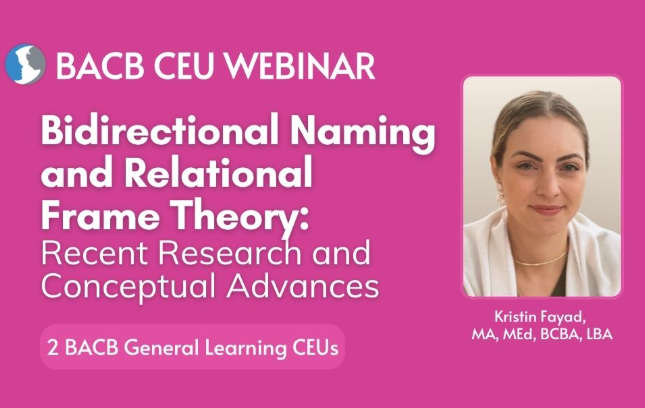
This 2-hour webinar will provide a comprehensive overview of contemporary research on Bidirectional Naming (BiN) and Incidental Bidirectional Naming (IncBiN)—two pivotal language capabilities in verbal behavior development. Drawing upon recent empirical studies and theoretical analyses, we will explore how BiN and IncBiN are assessed, how they relate to Relational Frame Theory (RFT), and how research findings inform effective instructional interventions.
Participants will gain clarity on how to test for BiN and IncBiN, interpret results meaningfully, and design interventions that promote robust language outcomes. The webinar will also synthesize recent advances in the field, offering practical takeaways for clinicians, or educators.
Learning Objectives
- Define Bidirectional Naming (BiN) and Incidental BiN (IncBiN) in behavior-analytic terms, including how they differ conceptually and functionally.
- Describe assessment procedures used to identify BiN and IncBiN in learners, including formal and informal testing strategies.
- Translate research into practice by outlining evidence-based instructional interventions that foster BiN and support incidental learning, including protocols like multiple exemplar instruction (MEI) and variations documented in the literature.
About Instructor
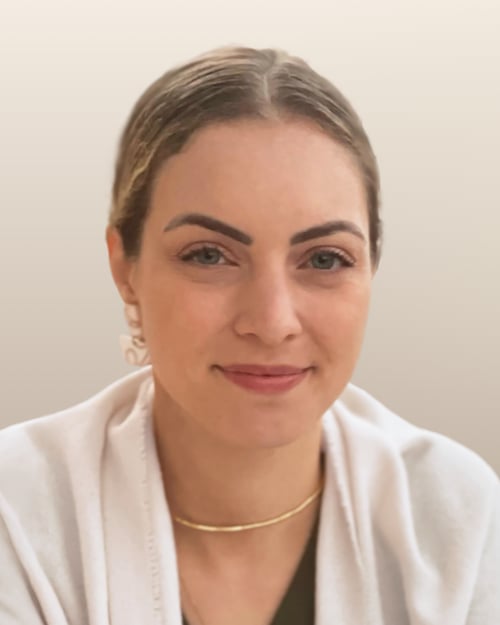
Kristin Fayad, MSEd, BCBA, LBA is a New York State Licensed Behavior Analyst and a Board Certified Behavior Analyst. She received her undergraduate degree in Psychology from Rutgers University in New Jersey. During her undergraduate studies, she enrolled in a fieldwork experience at the Douglass Developmental Disabilities Center (DDDC), which is where she decided to further her education in Applied Behavior Analysis (ABA).
She decided to pursue her Masters in Education at the Graduate School of Education (GSE) at Rutgers University in New Jersey while providing home-based ABA therapy to her own clients. She became a certified Special Education and Elementary Education Teacher in New Jersey.
Her goal is to help other professionals and parents to utilize these evidence-based practices in the natural environment with all learners. She is passionate about helping students to be successful at school, and being independent and successful learners at home as well.
Her main goal is to work with teachers and parents so that they utilize effective strategies to increase positive behavior in both neurotypical and neurodiverse clients.

