Talking to Kids About Big Feelings: A Parent’s Guide to Emotional Check-Ins

Kids feel everything with intensity. Excitement, frustration, worry, sadness, confusion. These big feelings often show up before a child has the emotional skills or language to handle them. That gap can lead to outbursts, withdrawal, or behavior that looks challenging but is really a call for support.
Emotional check-ins give kids a safe space to pause, name what is going on inside, and learn how to manage moments that feel overwhelming. When parents make check-ins a regular part of family life, kids learn that feelings are normal, and they learn that they do not have to handle them alone.
Why Emotional Check-Ins Matter
Children are still building the brain pathways that help them understand and regulate emotions. They often act before they can explain. A check-in shifts the focus from the behavior to the feeling behind it. It also teaches kids that adults can help them make sense of what is happening in their bodies and minds.
Check-ins support:
- Stronger emotional awareness
- Better communication between parents and children
- More confidence in handling stress
- Fewer explosive moments
- A calmer family environment
These small conversations add up. They teach kids that feelings are safe to talk about and safe to feel.
Create a Predictable Check-In Routine
Kids open up more when the setting is familiar. Short, simple check-ins work best. It might be in the car after school, during bedtime, or while eating breakfast. Choose a moment when your child is calm and not rushed.
Ask questions like:
- “How is your body feeling right now?”
- “What was the best part of your day?”
- “Did anything feel hard today?”
- “Is there something you wish you could change?”
Keep it brief. The goal is not to fix everything. The goal is to help your child feel heard and understood.
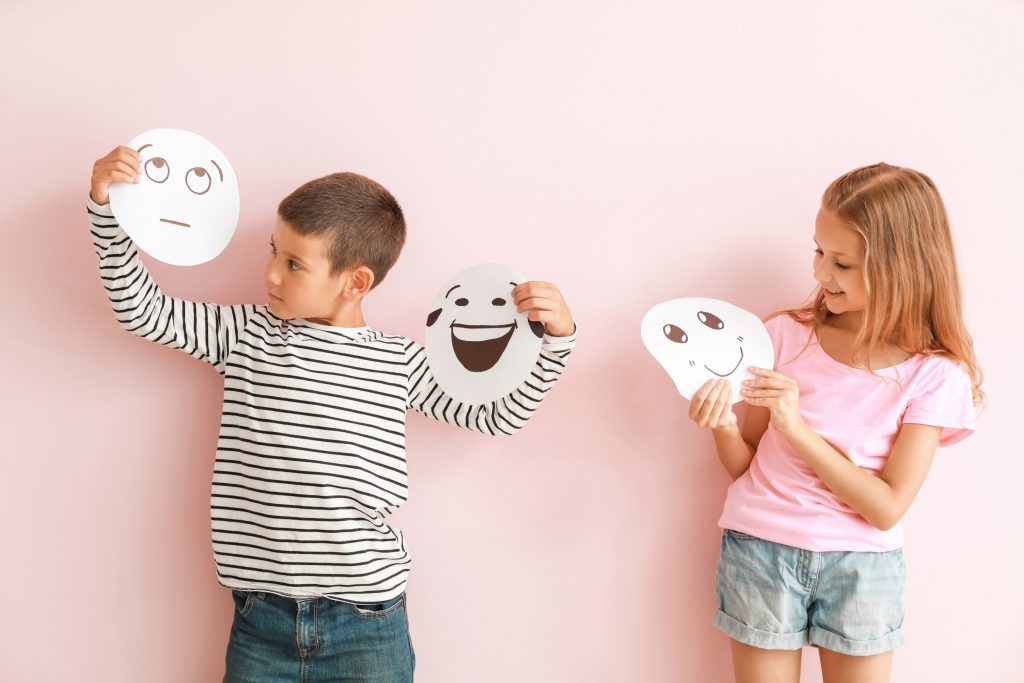
Help Kids Name Their Feelings
Many children do not have the words yet, especially when feelings are big. You can guide them without putting words in their mouth.
Try:
- “I see your shoulders are tight. I wonder if you might be feeling worried.”
- “Your voice sounds louder than usual. Are you feeling frustrated?”
- “It looks like something surprised you.”
If kids disagree, that is fine. You are modeling how to observe and reflect, not labeling them. Over time, they learn to do this for themselves.
A simple feelings chart can help. Younger children often respond well to pictures or colors, while older kids might prefer words. visuals take the pressure off and make it easier for kids to choose a feeling instead of explaining it.
Support the Body Before the Conversation

When feelings are intense, kids often need physical regulation before they can talk. Helping the body calm down makes room for clear thinking.
You can guide your child through:
- Deep breathing with slow, steady exhales
- A body stretch or shakeout
- A short walk
- A sip of water
- A hug or firm pressure on the shoulders if they want it
Deep breathing is especially helpful because kids can learn to use it anywhere. Make it simple. Try “smell the flower, blow out the candle” or “in for four, out for six.” Longer exhales help the nervous system reset.\
Once the body settles, kids can tune in to the emotion underneath.
Validate Before You Guide
Validation means showing your child that their feelings make sense. It does not mean you agree with the behavior. It means you understand the emotion driving it.
You might say:
- “It makes sense that you’re feeling upset.”
- “That was a lot all at once.”
- “Anyone would need a break after something like that.”
This step builds trust. Kids listen more when they feel understood. Once they know you are on their side, they are more open to problem solving.
Teach Simple Emotional Skills
After validation, you can introduce tools to help your child move through big feelings. Keep it practical and developmentally appropriate.
Some helpful skills include:
- Using deep breathing to slow the body
- Asking for a break when things feel too big
- Practicing positive self-talk, like “I can handle this”
- Noticing when they need help and asking for support
- Identifying which activities help them calm down
You can practice these skills during calm moments so they feel natural when emotions rise.
Keep Check-Ins Consistent
Kids learn through repetition. The more often you check in, the more natural these conversations become. You do not need long talks. A steady rhythm of short, caring moments builds emotional strength over time.
If your child has frequent big feelings that seem hard to manage, or if check-ins become overwhelming for your family, therapy can help. With the right support, kids learn emotional skills that help them navigate school, friendships, and challenges with confidence.
Emotional check-ins are not just conversations. They are connection, guidance, and reassurance all at once. And with your support, your child can learn that big feelings are something they can understand and handle.