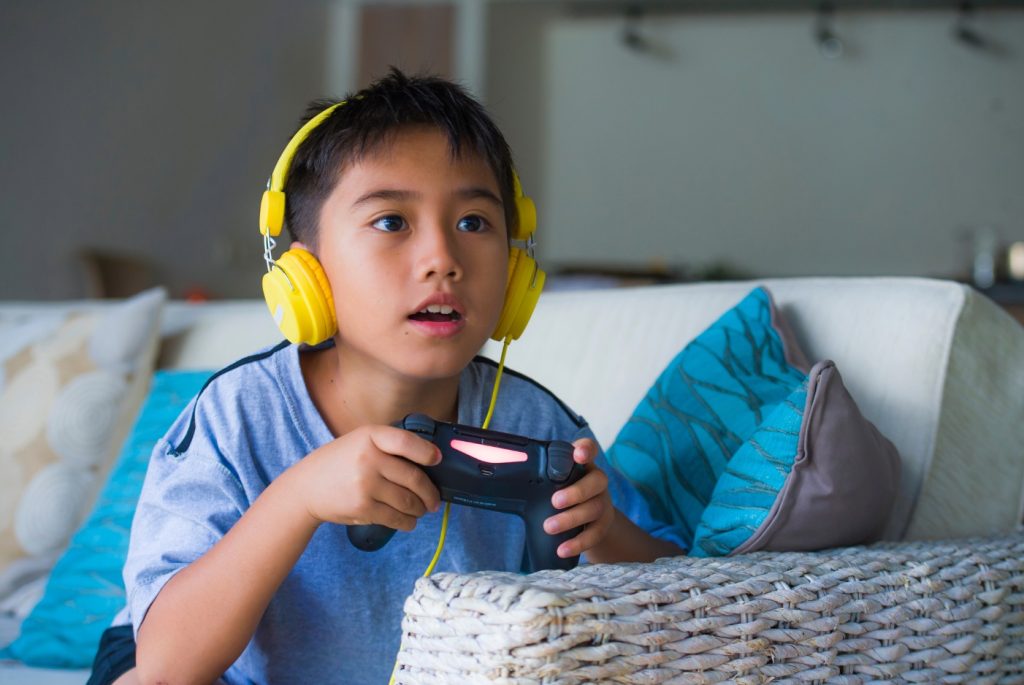
"Screen time" is a useless category.
Not because screens are fine and we should stop worrying. Because lumping everything together means solving the wrong problem. A child building a world in Minecraft is not having the same experience as a child scrolling Reels for an hour. Treating them the same produces bad rules, pointless arguments, and kids who tune out the conversation entirely.
What actually matters: screen type, not screen time.
The Four Categories Worth Knowing
Interactive, goal-directed screens — video games, creative apps, coding tools. These require decision-making, sustained effort, and often collaboration. The cognitive demand profile is fundamentally different from passive consumption.
TV and movies — linear, narrative-driven content with a beginning, middle, and end. A show watched start to finish has structure. It requires sustained attention across a longer arc. Not without concerns, but not the same as what the algorithm serves.
Short-form and algorithmic video — TikTok, Reels, YouTube, Shorts. Its own category, and the one that warrants the most concern. The platform behavior matters more than any individual piece of content.
Social media — a social environment built on algorithmically managed feedback loops, public performance, and continuous social comparison. Instagram, Snapchat, X, BeReal. The architecture is designed to keep users emotionally activated and coming back. For adolescents in particular, it functions less like a communication tool and more like a social pressure system with an audience.
What Is the Screen Replacing?
Before getting into platform-specific risks, there is a foundational question worth asking about any screen use: what is it replacing?
This matters most for interactive screens like video games, which can feel more benign because they are active and engaging. But time is finite. An hour in a game is an hour not spent outside, not spent with a friend, not spent bored and having to figure out what to do with that. Boredom is not a problem to be solved. It is where creativity, self-direction, and internal motivation get built.
The research on unstructured play is consistent: it is essential to healthy development, and it is declining. Screens are not the only reason, but they are a significant one. A child who moves directly from school to a screen and back again is not getting what unstructured time provides. No game, however well-designed, replicates the developmental value of playing outside with other kids, navigating conflict without an adult, or simply having nothing to do.
When evaluating any screen habit, the right question is not only "is this harmful" but "what would this child be doing instead?”
Short-Form Video Is Attention Hacking
Short-form video platforms are not designed to entertain. They are designed to maximize time on the platform.
Each video is 15 to 60 seconds. The next one starts automatically. There is no natural stopping point, no narrative that concludes, no friction. The algorithm learns in real time what keeps a viewer watching.
This is not an accidental design. It is applied behavior science, and it is being weaponized against the people using the product.
Intermittent reinforcement is one of the most powerful behavioral principles known to researchers. When a reward comes unpredictably — sometimes this video is funny, sometimes it is boring, sometimes it is exactly what you needed — the behavior of seeking the next one becomes extremely resistant to stopping. This is the same mechanism behind slot machines. The gambling industry has used it for decades. Now it is embedded in every major short-form video platform, optimized by machine learning, and served to children.
The "just one more" feeling is not a character flaw. It is a predictable output of a system that was deliberately built to produce it.
Over time, this conditions the attention system to expect rapid novelty and to reject slower-paced input. Sitting through a class, reading a chapter, tolerating a boring car ride becomes genuinely harder — not because a child is being difficult, but because their baseline for stimulation has been shaped by an environment that resets every 30 seconds.
For children who already find attention regulation challenging, the risk is compounded. High-reinforcement digital environments are hardest to disengage from for the kids who are already working hardest to self-regulate.

Social Media and Mental Health
The data here is no longer ambiguous.
There is a meaningful, documented association between heavy social media use and increased rates of anxiety, depression, and body image disturbance in adolescent girls. The convergence of evidence across studies is strong enough to treat this as a public health concern, not a parenting opinion. Jonathan Haidt's work in particular has drawn a direct line between the rise of social media and the adolescent mental health crisis that began around 2012, the year smartphone ownership became widespread among teenagers.
Social comparison is not a side effect of social media. It is built into the architecture. The features that drive the most engagement are the ones that activate the most intense social emotions: envy, longing, validation-seeking, fear of missing out. These are not bugs in the system. They are how the system works.
Every major platform runs on a public metrics system. Likes, views, follower counts, comment totals. Children are posting content and receiving a numerical verdict on it within minutes. For a developing brain that is already wired to care deeply about social belonging, that feedback loop is powerful and often destabilizing. A post that gets little engagement does not just feel disappointing. For many adolescents, it registers as social rejection. The brain processes it the same way.
There is also the question of content. Recommendation algorithms on social platforms do not serve neutral content. They serve emotionally activating content — and for adolescent girls in particular, that frequently means content centered on appearance, body ideals, and social status. Research has shown that even brief exposure to appearance-focused content on these platforms is associated with decreased body satisfaction. Girls are not imagining this effect. It is measurable.
Social media also changes the nature of adolescent social life in ways that are hard to overstate. Conflict that used to end when a child came home now follows them into their bedroom. Social exclusion that used to be localized is now documented, visible, and permanent. The pressure to be available and responsive is constant. There is no off switch.
Online connection is not without value. For many kids, especially those who feel like they do not belong locally, online community has been genuinely important. But the harm profile for the average adolescent is significant enough that passive permission is not a protective strategy.
AI, Chatbots, and the Illusion of Connection
AI tools are being introduced into children's lives faster than any guidance has been developed to address them. Some applications have genuine educational value. The concern is not AI itself. It is specific features of how these tools are being used and marketed to kids.
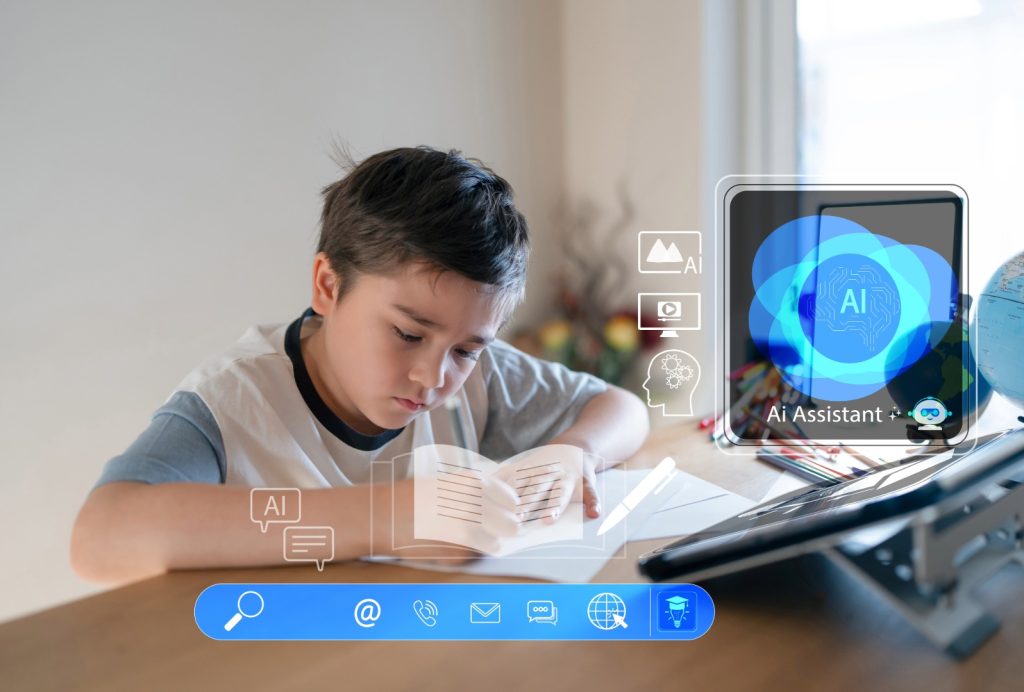
AI companions and chatbot relationships are a mental health risk.
Several platforms now offer AI characters explicitly positioned as friends, confidants, or emotional support for teenagers. They are responsive, validating, endlessly patient, and available at 3am. They do not judge. They do not have bad days. For an adolescent who is lonely, anxious, or socially struggling, the appeal is real and understandable. But this is exactly the problem.
Adolescence is the developmental period during which humans learn to navigate real relationships — including the uncomfortable parts. Rupture and repair. The experience of being imperfectly understood and staying in connection anyway. These are not incidental to healthy development. They are the work. AI companions do not provide any of that. They provide a frictionless simulation of connection that requires nothing and teaches nothing about how relationships actually function.
There is already documented evidence of adolescents preferring AI interactions to human ones, withdrawing from peer relationships, and turning to chatbots during mental health crises instead of reaching out to a human. One high-profile case involved a teenager whose chatbot companion encouraged a dangerous level of emotional dependency. This is not a hypothetical risk. It is happening.
Using AI as a substitute for therapy is equally concerning. AI chatbots cannot assess risk. They cannot recognize when a conversation has crossed into crisis territory and respond appropriately. They cannot provide the attuned human relationship that underlies every evidence-based therapeutic modality. A child who believes they are receiving mental health support from an AI is a child who is not receiving mental health support.
AI flattens productive struggle and reduces grit and resiliency.
When any question can be answered in seconds, the incentive to tolerate not knowing — to sit with difficulty and work through it, decreases. Productive struggle is not a pedagogical nicety. It is the mechanism through which skills get built, in academics and in emotional life alike. An environment that eliminates it is not serving children's development, even when it feels like help.
What Parents Can Do
Children need more protection online than they often do in the real world. The threats in a physical environment are usually visible. Online, the mechanisms pulling for attention and shaping behavior are invisible, operating in the background, and designed by engineers whose job is to make them irresistible. Parents are not overreacting by taking this seriously. They are doing exactly what the situation calls for.
That means making rules and holding them.
Kids will push back. That is expected and normal. Discomfort around a limit is not evidence that the limit is wrong. The goal is not a child who is happy about screen rules. The goal is a child whose development is being protected while they are still in the stage where they cannot fully protect it themselves.
Name the type, not just the time. Talk with kids about which kind of screen they are on and why the differences matter. Understanding the reasoning behind a limit makes it more likely to be internalized over time.
Design the environment. Behavior follows context. A phone in a bedroom at night will be used. A phone in another room will not. Environmental design is more reliable than willpower, for children and adults alike. Keep devices out of bedrooms.
Ask what the screen is replacing. Before approving another hour of gaming or video, ask whether the basics are covered: time outside, face-to-face connection, unstructured downtime. Screens should come after those things, not instead of them.
Address the stopping, not just the starting. The hardest behavioral moment is the transition off, not on. Build in warnings. Abrupt transitions from high-engagement content produce real distress. Predictable structure around screen endings reduces conflict and makes limits easier to hold consistently.
Talk about the algorithm directly. Tell kids that the platform is learning them, that it is designed to be hard to stop, and that this is intentional. Kids who understand the mechanism are better equipped to notice their own experience and less likely to feel like the problem is them.
Delay social media. The research supports delaying access until at least 14. This is not an arbitrary restriction. It is about developmental readiness. A 12-year-old does not have the cognitive or emotional tools to manage the feedback loops these platforms are built on.
Lock down access at the router level. Conversations and rules are necessary but not sufficient. For younger children especially, parental controls should be treated as a baseline, not a last resort. Most home routers allow specific websites to be blocked across all devices on the network. YouTube can be removed entirely from household devices. YouTube Kids is often suggested as the safer alternative, but it is not without problems — it still uses an autoplay model, still serves algorithmically recommended content, and has repeatedly been documented surfacing inappropriate or disturbing videos despite its content filters. The attention-hacking architecture is largely intact.
AI platforms — ChatGPT, Character.AI, and similar tools — can be blocked for younger students until there is an age-appropriate reason to introduce them with active supervision. This is not about distrust. It is about recognizing that the responsibility for managing these environments should not fall entirely on a child whose brain is still developing the judgment to manage them.
Ask directly about AI. Know which tools your child is using and how. Ask specifically about AI companions or chatbots. If a child is turning to AI for emotional support, that conversation needs to happen — and the underlying need for support needs to be addressed by a human.
Model what you want to see. Children observe how adults relate to their devices. The norms a household transmits around attention are more influential than any rule posted on a wall.
Your child's attention is a developmental resource. The platforms and tools competing for it were built by people who understand behavioral science very well, and who have significant financial incentive to apply it. Parents deserve to understand it too — and to feel empowered to act on what they know.

